

MODULAR TRACE EVIDENCE EXAMINATION
A Modular System for Trace Evidence Examination
ffTATM
Built Around a Leica Laboratory Microscope
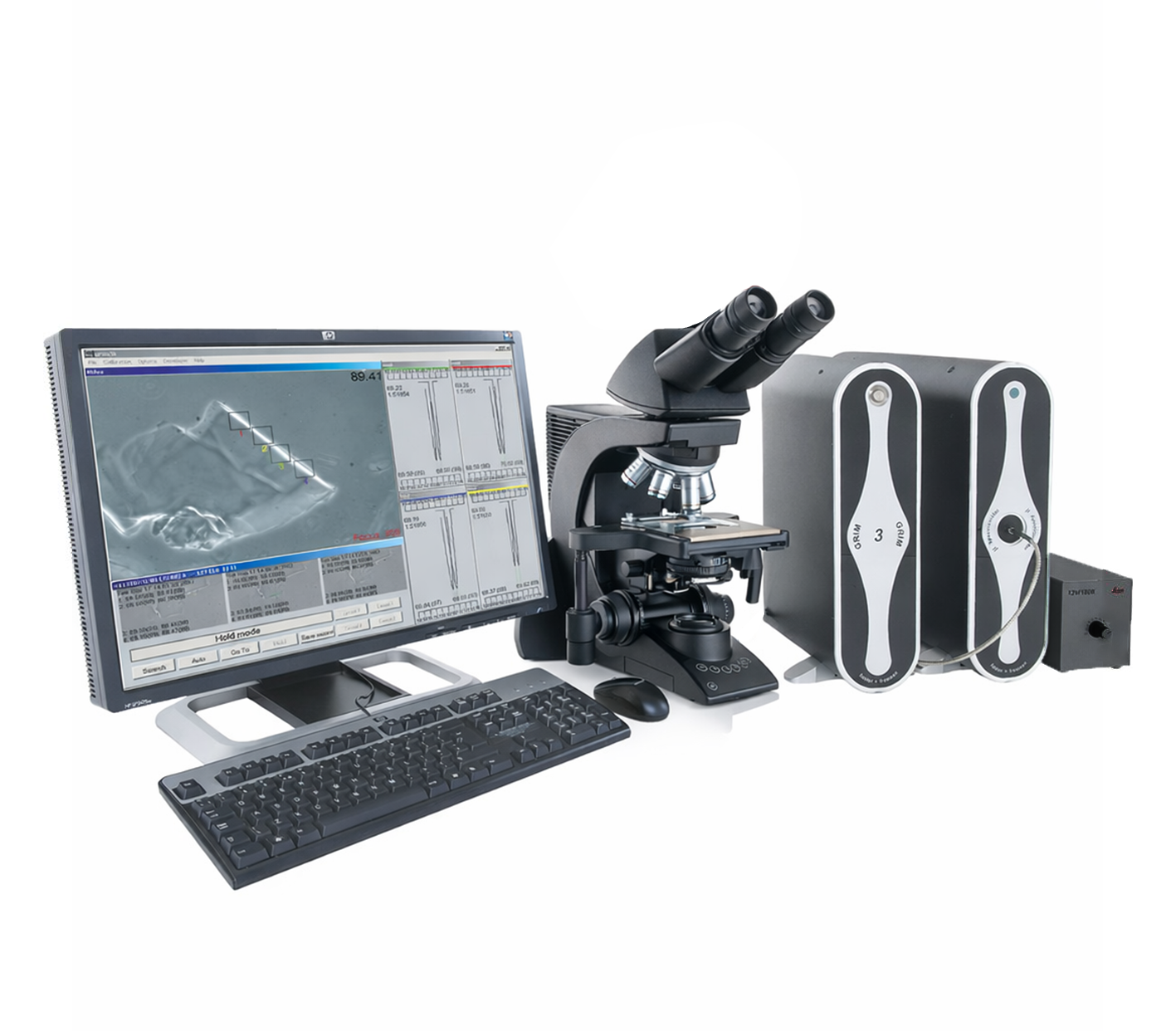
The ffTA is a powerful and flexible multi-functional system that provides the crime laboratory with a range of analytical facilities on a single microscope operated through a single PC. By switching from module to module the operator is able to perform a wide range of analytical tasks to extract the maximum amount of forensic evidence in the shortest possible time.
Built around the Leica DM2700M laboratory microscope with high power LED illumination, the ffTA is a unique modular system that enables the user to add functions to meet specific laboratory requirements. Using an optical multiplexer the operator simply switches the image from one module to another.
Modules & Features
The modular nature of the ffTA system makes it ideal for a wide range of applications.
Browse the ffTA modules below to find out more:
GRIM®3
glass RI Measurement
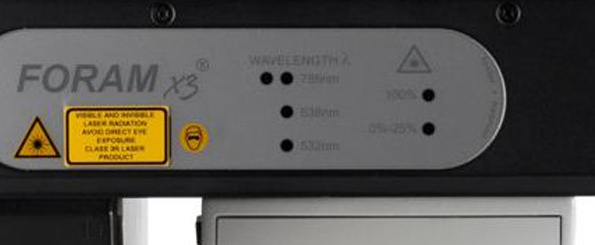
Foram X3
multi-wavelength Raman spectroscopy
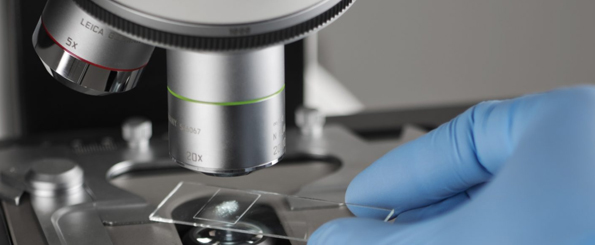
The ffTA GRIM® system can be used to identify and group fragments of glass through the determination of a samples refractive index using the standard oil immersion/temperature variation technique.
More Info
Using GRIM®, repeat measurements produce results with a standard deviation of, typically, 0.00002RI over a 5 hour period and 0.00003RI over a 5 day period.
The system can monitor up to four glass fragment edges per operation, speeding the casework examination process, giving improved statistical accuracy and reducing calibration time.
Casework measurements are filed, password protected, with the essential information that identifies each fragment of glass examined, including for example its source, casework reference, and operator identity. Basic statistics are generated including average, range, spread and standard deviation. Results may be displayed as scatter diagrams and formatted for exportation to Microsoft Office for additional analysis.
Features
- Multiple edge measurements
- Calibration
- Enhanced casework documentation
- High level of temperature stability and accuracy
Additional Applications
- Anatomical pathology, diagnosis through live cell imaging
- Inspection of agricultural material
- Inspection of circuit lead bonds
Glass Fragment Analyser
Now supplied as standard with the ffTA GRIM®3, that provides an interpretation tool to assist forensic experts in evaluating the results of glass RI measurements. The software includes two grouping algorithms and two match test options providing the examiner with the flexibility to select the most appropriate approach for their lab’s quality requirements.
Raman spectroscopy is a powerful analytical tool that is widely used in forensic science for the study of a variety of organic and inorganic materials including paint chips, fibers, inks, controlled substances, precursors, pesticides as well as residues from explosives, flammables, and accelerants.
More Info
Through the analysis of Raman spectra, specific to molecular structure, this powerful module is able to provide valuable “fingerprints” for comparing, differentiating and identifying materials. By installing the wide range of databases that Foster + Freeman offer, ‘unknowns’ can be identified, as many substances produce unique Raman signatures.
Equipped with a choice of one or three laser wavelengths 785nm (invisible), 638nm and 532nm, the Foram X3 module is a uniquely versatile device.
High levels of sensitivity can be achieved with the 532nm laser, while the 785nm, an infrared laser is better able to suppress fluorescence. A balance between power and sensitivity can be achieved through the use of the 638nm laser.
Features
- Non-contact, non-destructive analysis of trace materials and inks
- Analysis of materials in solid or liquid form
- Rapid examination with minimal sample preparation required
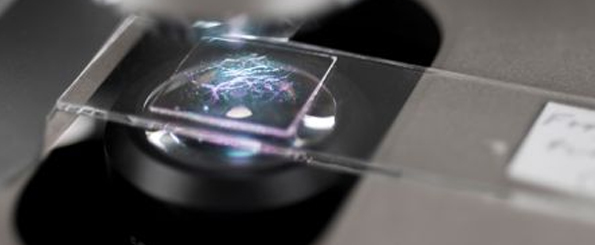
Fluorescence imaging
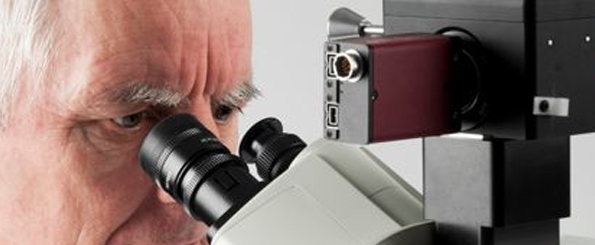
Image processing, comparison, and analysis
A widely used technique for the identification and comparison of trace materials including paint chips, fibers, and biological materials.
Including four excitation bandwidths: UV, Violet, Blue and Green, this module provides versatile high-resolution imaging as well as a fluorescence imaging option when used with the Micro-spectrometer module.
Forensic Applications
- Identification of illegal substances
- Examination of accelerants (petrol, diesel, kerosene etc.)
- Imaging of biological samples
Additional Applications
- Anatomical pathology, diagnosis through live cell imaging
- Inspection of agricultural material
- Inspection of circuit lead bonds
A comprehensive module for processing of images captured using the ffTA scientific grade digital color camera.
More Info
Image Enhancement
Contrast stretch, Noise Filters, Grey Level Equalization, Fast Fourier Transform, Gamma Correction, and Sharpen.
Image Analysis
Measurement of distance, angle, and area with calibrated grids.
Image Annotation
Image annotation, including text, arrows, lines, boxes, and circles.
Image Comparison & Transformations
A side-by-side comparison of live and stored images on a vertical or horizontal split screen with user adjustable split position. Superimposition and subtraction of live and stored image (option of red/green rendered images for extra clarity)
UV-Vis-IR Micro Spectrometry
Light polarisation
A powerful analytical tool that is widely used in forensic science for the study and comparison of paint chips, fibers, and inks.
More Info
Spectra in the visible region provide the user with objective measurements of color and through the examination of ultra-violet and infra-red spectra, users are able to make comparisons between materials that may be indistinguishable to the naked eye. Statistical analysis software offers the user further tools for discrimination.
Features
The micro-spectrometer is available with three wavelength ranges:
- 240–1000nm; UV through to IR
- 400–1000nm: Visible and IR
Features include:
- Fast non-destructive analysis
- Transmittance and Reflectance micro-spectrometry
Optional fluorescence spectroscopy using Fluorescence Imaging module
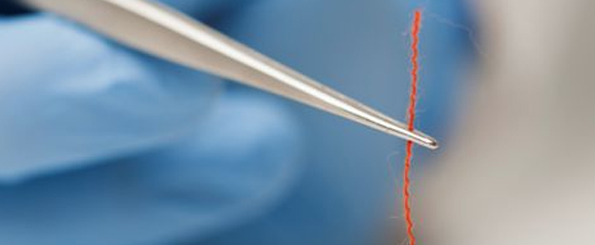
A module primarily used for the identification of fibres by the measurement of their cross polar birefringence.
In addition, the ffTA Polarised Light Module can be used for the identification of chemical crystals (e.g. caffeine) rocks and minerals.
More Info
Consisting of a pair of polarizers, a retardation plate, and a 360-degree circular rotating specimen stage with Vernier scales, this module enables birefringence to be measured to an accuracy of 0.1 degrees.
Applications include
- Detect fibres, crystals, and soil etc.
- Identify natural and synthetic fibres
- Toxicology and drug analysis