

ELECTROSTATIC DETECTION APPARATUS
Industry Standard System for Detecting Indented Writing
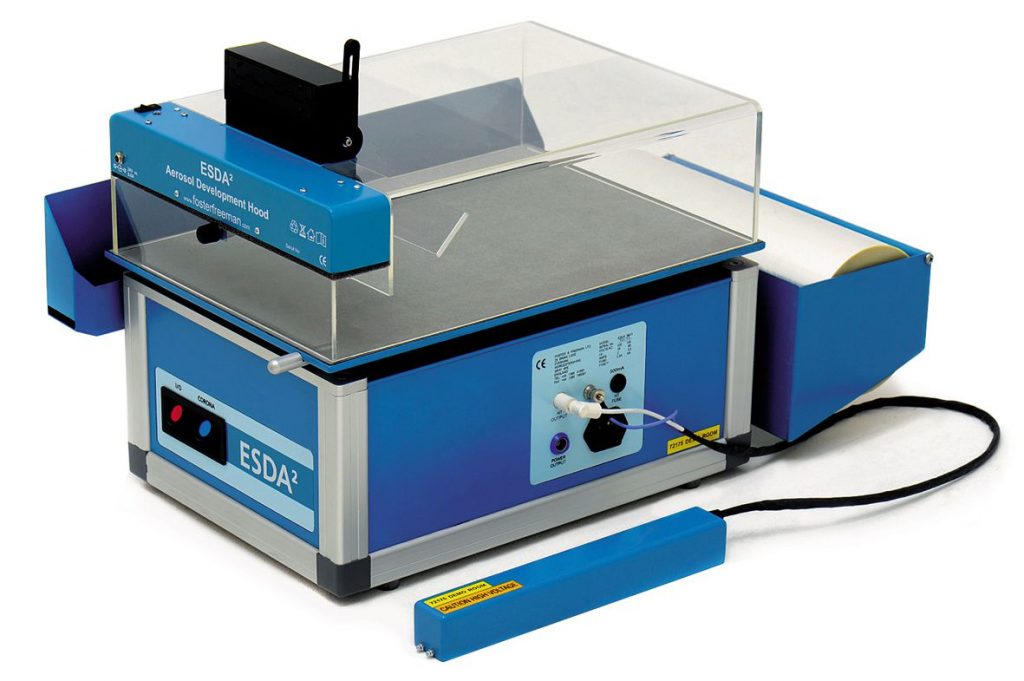
ESDA®2
Industry Standard for More Than 40 Years
Such is the level of success achieved by the Foster + Freeman ESDA, the terms ESDA and ‘the ESDA process’ has become industry standard terminology for the method of revealing indentations or impressions on paper.
The ESDA started life as part of a research project to develop a non-chemical, non-destructive method of identifying fingerprints on fabric, and while the project itself did not prove successful the ESDA’s secondary use, that of detecting indented writing on paper proved to be of huge interest to document examiners worldwide.
READ MORE
The ESDA technique works by an electro-static process, in much the same way as a photocopier. The sheet of paper to be investigated is placed on a bronze plate that has been perforated by tiny holes and earthed. Underneath the slab is a pump, which, when switched on, sucks air through the plate and holds the paper down flat against it. A sheet of transparent polymer film is laid over the top of the paper which is then charged with static electricity: a metal wand known as the corona discharge unit is passed over it. Inside the wand is a thin wire with a potential of about 5,000 volts. As a result, static electricity discharges itself to earth through the bronze plate.
The conductivity of the paper and film laid across the plate differs at those places where there are indentations in the paper, this difference results in an electronic image of the indentations being created on the sheet of film. This image is then developed by allowing fine carbon granules to spread over it, either by an aerosol process in a cloud chamber or by pouring carbon granules, mixed with small plastic balls which act as a carrier, across the surface of the paper. The granules stick to the electrostatic image of the indentations, and the image becomes visible.
A Breakthrough Case
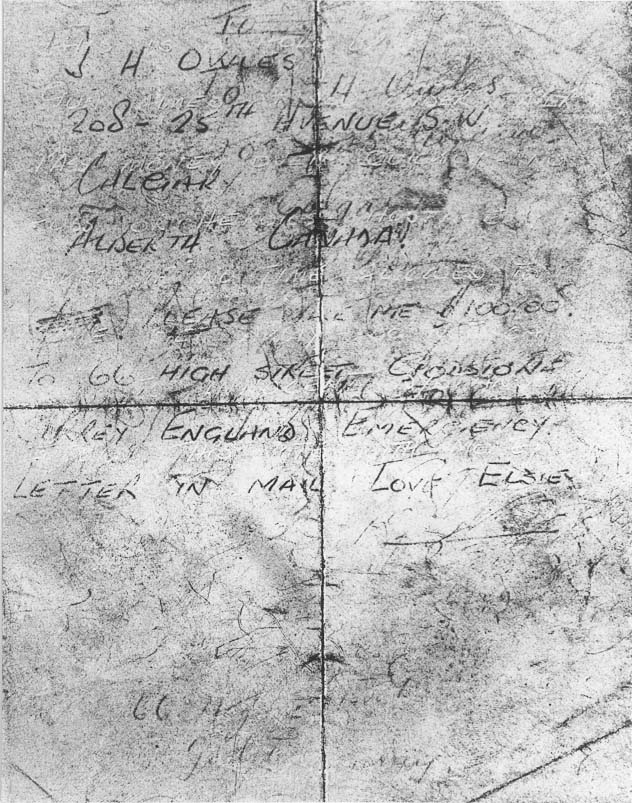
The ESDA went from being a research project to an essential piece of document examination equipment almost overnight when, following a raid on a London bank, police used the ESDA technique to examine a note handed by the robber to the bank teller demanding cash. Hidden to the naked eye but revealed by the ESDA were the indentations of a telex message drafted to someone in Canada and pleading for money to be sent to an address in Surrey. The man was arrested and the story hit the headlines. News of the ESDA’s capabilities spread fast.
With strong backing from the UK Home Office, Doug Foster and Bob Freeman set up in partnership making the first run of ESDA devices from the garage at Doug’s home.